


MRAM Memory – Fast and Reliable Non-Volatile Storage
MRAM (Magnetoresistive Random Access Memory) stores data using magnetic states rather than electrical charge.
As a result, it retains information when power is removed while supporting high-speed read and write operations.
In practical applications, engineers often select MRAM for systems that require both speed and non-volatility.
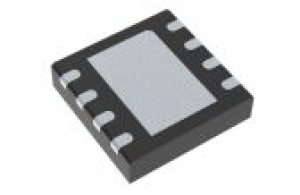
SPI MRAM
Low-pin-count serial interface with fast and reliable non-volatile data access, high endurance, low power, suitable for embedded controllers and IoT devices.
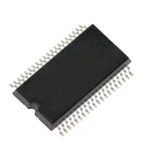
Parallel MRAM
High-speed parallel interface compatible with SRAM timing, fast random access, non-volatile retention, ideal for cache, temporary buffers, and high-speed storage.
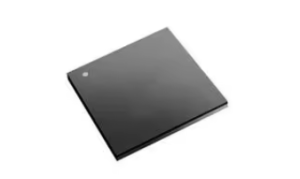
ST‑DDR4 MRAM
The ST‑DDR4 MRAM comes in a 96-ball BGA package, featuring 96 tiny solder balls on the bottom for reliable and efficient high-speed DDR4 interface connection.
Automotive‑Grade MRAM
Automotive‑Grade MRAM is commonly offered in a reliable BGA (bottom‑solder‑ball) or other SMT surface‑mount package, designed for automotive‑grade applications instead of a traditional through‑hole pin design.
AHR‑MRAM
High‑reliability MRAM devices are commonly offered in BGA (bottom‑solder‑ball) packages or other surface‑mount packages (such as small DFN), designed for automotive‑grade temperature ranges and high‑speed, reliable connections.
Embedded MRAM
Embedded MRAM is typically integrated within an MCU or SoC, using internal bus connections instead of external pins, designed for automotive‑grade or high‑reliability applications and providing fast, non‑volatile on‑chip memory.
What is MRAM Memory?
MRAM (Magnetoresistive Random Access Memory) stores data using magnetic states rather than electrical charge. As a result, it retains information when power is removed while supporting high-speed read and write operations. In practical applications, engineers often select MRAM for systems that require both speed and non-volatility.
Additionally, this technology helps simplify system design by reducing the need for backup data retention components.
Key Features of MRAM Memory
Embedded and industrial systems benefit from MRAM due to several key features:
Non-volatile storage preserves data reliably without power.
Fast read and write performance ensures efficient operation in demanding systems.
High endurance supports repeated operations over long periods.
Low power consumption reduces energy requirements and heat generation.
Stable operation maintains consistent performance across varying environments.
Moreover, these advantages make MRAM a practical solution for a wide range of electronic applications.
Applications of MRAM Memory
This memory technology can be applied to many types of systems. For instance, engineers integrate it into:
Embedded systems
Industrial control
Automotive electronics
IoT devices
Data logging
Communication equipment
Furthermore, MRAM often suits applications that require both high speed and reliable data retention.
MRAM Memory Considerations
Designers should evaluate several factors when selecting this non-volatile memory, including interface type, memory density, operating voltage, and temperature range. In addition, MRAM can simplify certain system designs by eliminating the need for extra data retention components.
Overall, its combination of speed, reliability, and non-volatility makes MRAM suitable for a wide variety of embedded and industrial systems.
You can visit our YouTube channel.
FAQ
What is MRAM Memory?
MRAM provides non-volatile storage that retains data without power while supporting efficient read and write performance.
Where is MRAM commonly used?
It finds application in embedded systems, industrial equipment, and electronics that require stable data storage.
How is MRAM different from traditional memory?
Unlike conventional memory that relies on electrical charge, MRAM uses magnetic states to store information.
Does MRAM require backup power?
No, MRAM retains data without external backup power.
Is MRAM suitable for industrial use?
Yes, some MRAM devices operate across a wide temperature range, making them suitable for industrial applications.