


What Are SMD Components?
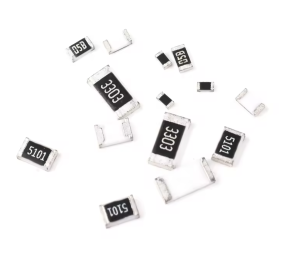
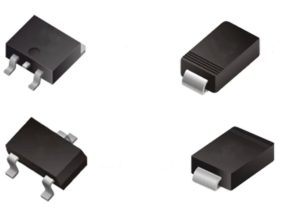
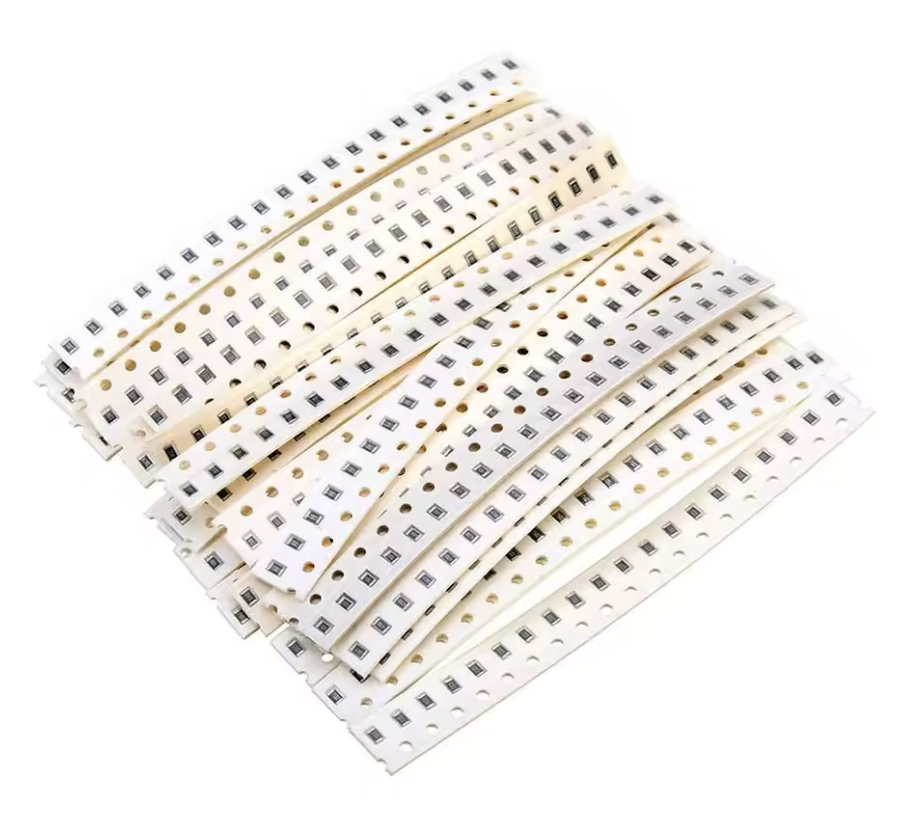
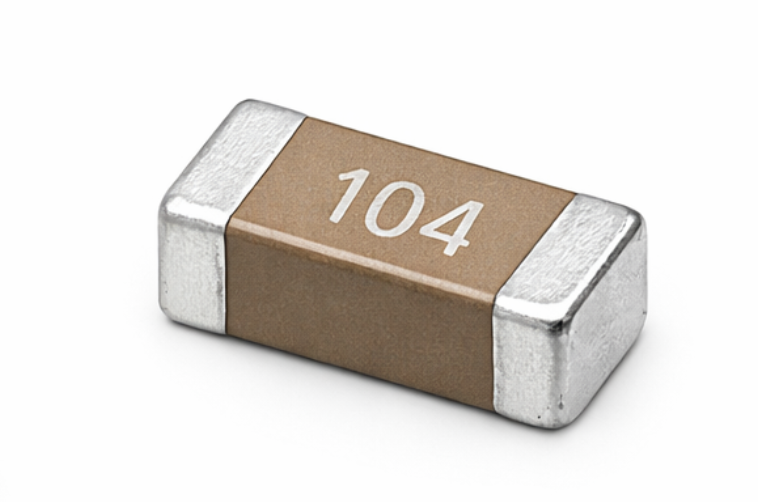
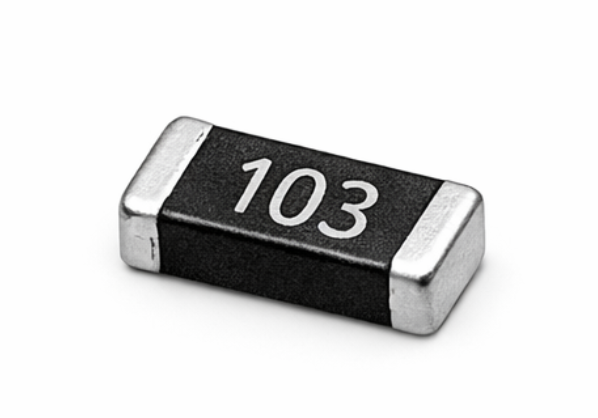

In modern electronics, engineers increasingly rely on Surface-Mount Devices (SMD Components) instead of traditional through-hole components. These devices are smaller, allow denser layouts, and improve electrical performance, making modern PCB design more efficient.
To learn more about our integrated circuits and memory products, please visit the ICs and Memory pages.
SMDs are electronic components mounted directly on PCB pads using Surface-Mount Technology (SMT). Unlike through-hole components, they do not require holes, reducing mechanical stress. Their compact size supports high-density layouts, and they are compatible with automated assembly lines. Furthermore, short leads minimize parasitic effects, enhancing signal integrity.
Resistors, capacitors, and inductors come in small packages such as 0402, 0603, and 0805. They handle tasks like filtering, energy storage, and voltage division while maintaining high precision.
Diodes, transistors, and ICs provide switching, amplification, and signal processing. IC packages include SOP, QFN, BGA, and TQFP.
Crystals, thermistors, and ferrite beads are used for oscillation, EMI suppression, and temperature/current protection.
SMDs appear in:
Q: Can SMDs be hand-soldered?
A: Small packages like 0402 are difficult to hand-solder and require reflow or hot-air tools. Larger packages such as 1206 are more manageable.
Q: Why are SMDs popular?
A: They allow compact, high-performance designs and automated assembly.
You can visit our YouTube channel.
MT29F16G08CBABA NAND Flash Memory Overview – MT29F16G08CBABA The MT29F16G08CBABA is a high-performance 16Gb MLC NAND Flash Memory designed for industrial and embedded applications. It provides reliable data storage, fast read/write speeds, and consistent performance across a wide operating temperature range. Its robust design ensures long-term data retention and stable operation in demanding environments, making it…
Memory IC: Types, Functions, and Applications in Modern Electronics Introduction Memory IC (Integrated Circuit) is a fundamental component in modern electronics, responsible for storing and retrieving data efficiently. Whether in smartphones, industrial systems, or embedded devices, memory ICs ensure smooth operation and reliable performance. As electronic systems become more advanced, the demand for high-speed, low-power,…
What Is a Chip? A chip, also known as an integrated circuit (IC), is a small electronic device made from semiconductor material, usually silicon. It integrates many tiny electronic components—such as transistors, resistors, and capacitors—onto a single piece of silicon to perform specific electronic functions. Chips are the core components of modern electronic systems. They…
MT29F4G08ABAFAH4-AAT:F TR NAND Flash Memory Manufacturer Number: MT29F4G08ABAFAH4-AAT:F TR Manufacturer: Mircon Description / Features: NAND Flash SLC 4Gbit 512M x 8 FBGA E-mail Whatsapp Wechat Overview The MT29F4G08ABAFAH4-AAT:F TR from Micron Technology is a high-performance 4Gb NAND Flash memory, specifically designed for reliable data storage in embedded systems. With its advanced NAND architecture, it provides…
Request Info K9F4G08U0E NAND Flash Memory Overview The K9F4G08U0E is a high-performance NAND Flash memory from Samsung Semiconductor. It provides reliable, non-volatile storage for various electronic devices. Designed for both industrial and consumer applications, it ensures stable performance, high endurance, and compact packaging suitable for space-constrained systems. To learn more about our integrated circuits and…
Manufacturer Number: Z16F2811AL20EGManufacturer: ZiLOG Description / Features: 16-bit Microcontroller (MCU) – 128KB Flash with 4KB RAM, 2 UARTs, Extended Temperature Range (XTemp) E-mail Whatsapp Wechat To learn more about our integrated circuits and memory products, please visit the ICs and Memory pages. Alternative Part Numbers Fully Compatible Alternatives (Recommended): Z16F2811AL20SG Functionally equivalent to Z16F2811AL20EG, with…
sales@faithnewdawn.com
kelsey418@qq.com