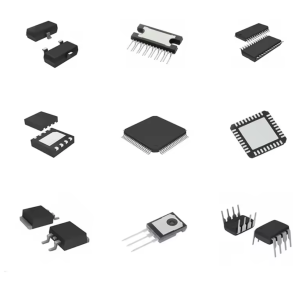


What is an IC (Integrated Circuit)?
An Integrated Circuit (IC) is a fundamental component in modern electronics. This article explains what an IC is, how it works, and its applications.

What is an IC (Integrated Circuit)?
What is an IC? Simply put, an Integrated Circuit (IC), also called a microchip, is a compact electronic device that combines many components—such as transistors, resistors, and capacitors—on a single semiconductor, usually silicon. Today, ICs are used in almost every type of electronic device, from smartphones and computers to industrial machines and vehicles.
By integrating multiple functions into one chip, ICs offer significant advantages. For example, they reduce the overall size of devices, save power, and improve reliability. As a result, complex electronics become more practical, efficient, and cost-effective.
If you want to learn more about integrated circuits, please visit our dedicated ICs page. You can also explore how Faith New Dawn Limited supplies a wide range of ICs for various applications.
For more information about integrated circuits, please visit the ICs page.
More about Faith New Dawn Limited
How Does an IC Work?
ICs contain thousands or even billions of tiny electronic components that are carefully connected together. For example, these components can:
- Process signals to transmit or interpret information.
- Perform calculations that drive devices and systems.
- Store and retrieve data efficiently.
- Control circuits to manage electronic operations.
As a result, integrating all these components on a single chip allows devices to operate faster, consume less power, and require fewer external parts. Consequently, engineers can design smaller, more efficient, and more reliable electronics.
Types of ICs
ICs are categorized based on their functions. Specifically, they include:
- Analog ICs – Handle continuous signals, such as those used in audio amplifiers or sensor circuits.
- Digital ICs – Work with binary data (0s and 1s), for example in microprocessors and memory chips.
- Mixed-Signal ICs – Combine analog and digital functions, which is useful in communication systems and embedded applications.
- Special-Purpose ICs – Designed for specific tasks, such as managing power or controlling RF circuits.
In addition, understanding these categories helps engineers choose the right IC for each application.
Applications
ICs are applied across many fields. For instance:
- Consumer Electronics – Smartphones, laptops, TVs, and wearable devices.
- Automotive – Engine control, driver-assistance systems, and electric vehicles.
- Industrial Automation – Robotics, sensors, and factory control systems.
- Medical Devices – Monitors, imaging equipment, and surgical devices.
- Aerospace & Defense – Satellites, avionics, and other high-reliability electronics.
Overall, ICs play a critical role in modern technology, enabling devices to be smaller, faster, and more reliable.
Conclusion
Integrated Circuits are essential for modern electronics. They make devices smaller, faster, and more reliable, and they continue to support new technology developments in areas like automotive, IoT, and medical devices.
Contact Us
We supply a wide range of integrated circuits, including memory chips, microcontrollers, and hard-to-find components. Contact us for more information and technical support.
FAQ – What is an IC (Integrated Circuit)
1. What does IC stand for?
IC stands for Integrated Circuit, also commonly called a microchip.
2. What is the function of an IC?
ICs can process signals, perform calculations, store data, and control electronic systems. They integrate multiple electronic components on a single chip to improve efficiency and reliability.
3. What are the types of ICs?
The main types of ICs are:
- Analog ICs – Handle continuous signals, used in amplifiers and sensors.
- Digital ICs – Operate with binary signals (0 and 1), used in microprocessors and memory chips.
- Mixed-Signal ICs – Combine analog and digital functions for communication systems or embedded applications.
- Special-Purpose ICs – Designed for specific tasks like power management or RF control.
4. Where are ICs used?
ICs are found in almost all electronic devices: smartphones, computers, automotive systems, industrial equipment, medical devices, and aerospace electronics.
5. Why are ICs important?
ICs allow electronic devices to be smaller, more reliable, energy-efficient, and cost-effective, enabling the development of complex electronics in a compact form.
6. Can I buy ICs for custom projects?
Yes, you can source ICs for various applications, including microcontrollers, memory chips, and specialized components, depending on your project requirements.